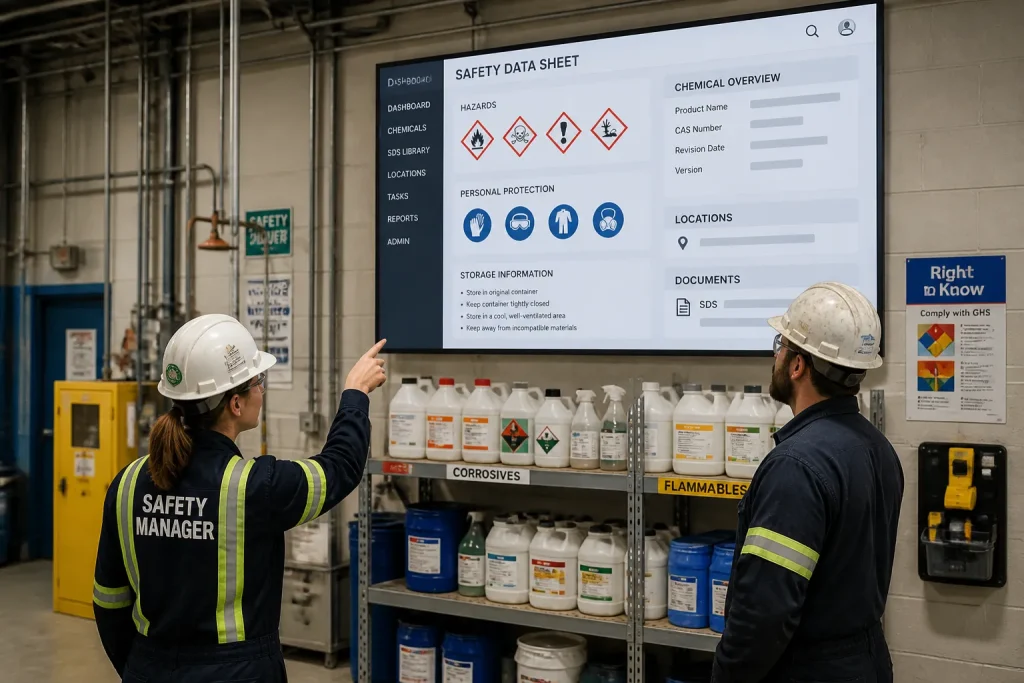
It is time to manage Safety Data Sheets (SDS) with specialized software when manual methods using folders and email become inefficient, error-prone, or non-compliant. This typically occurs as your product portfolio grows, regulatory requirements become more complex, or your business expands into international markets. A dedicated platform streamlines distribution, ensures compliance, and reduces administrative overhead. Read the overview article about managing safety data sheets
In which situations does software become essential to manage safety data sheets?
Software becomes essential to manage Safety Data Sheets in situations of growing scale, tightening regulations, and expanding markets. Key triggers include managing a large volume of SDSs that makes manual tracking impossible, facing strict customer or legal compliance demands, and handling multiple languages for international distribution, which complicates version control.
At what point does product volume make SDS software necessary?
While there is no exact number, a move to software makes sense when your team spends several hours per week searching for, updating, and emailing SDSs, or when version control errors start to occur. This tipping point often arrives when a company manages more than a few dozen products, as the risk of distributing an outdated document increases significantly.
Which regulatory or customer requirements trigger a move to systematic SDS management?
Specific compliance demands often necessitate a systematic approach. This can be triggered by regulations like REACH in Europe, which requires proactive distribution of updated SDSs to all downstream users. It can also come from large customers, especially in retail or industrial sectors, who mandate that their suppliers use a specific portal or system to ensure they have instant, reliable access to the latest safety information for all products they purchase.
How do cross-border sales influence the need for digital SDS management?
Selling products internationally makes a digital platform to manage safety data sheets almost mandatory. Each country or economic region may require an SDS in its official language and formatted to meet local regulations. Manually managing these multiple versions is highly prone to error. A centralized system ensures that the correct, compliant version is distributed to the appropriate market, preventing compliance failures, shipping delays, and legal issues.
How do different supply chain roles manage safety data sheets?
Different sectors manage Safety Data Sheets based on their role in the supply chain, with each facing unique challenges that a centralized platform resolves. Manufacturers focus on creating and distributing accurate source documents, distributors on aggregating and managing vast numbers of SDSs from various suppliers, and retailers on making information accessible to end-users. The goal is a seamless flow of compliant safety information from the point of origin to the final consumer.
For manufacturers, the primary task is authoring the original SDS and ensuring every direct customer receives the correct, up-to-date version. Their main challenge is managing updates; whenever a product formulation or a regulation changes, they are responsible for distributing the revised SDS to their entire customer base promptly and efficiently.
Distributors and wholesalers sit in the middle, handling thousands of products from hundreds of different suppliers. Their key challenge is aggregation and version control. They must collect the latest SDS from all their manufacturing partners and have a reliable system to provide the correct document to their own customers on demand. Without a central platform, this becomes an overwhelming manual task.
Webshops and retailers are focused on final accessibility. They must ensure that customers, and sometimes employees, can easily access the SDS for any relevant products they sell. This is a legal requirement in many jurisdictions and a customer expectation. Their challenge is to present this information clearly and ensure it is always the most current version provided by the distributor or manufacturer.
What are some real-world improvements from better SDS management?
Companies that adopt a dedicated system to manage Safety Data Sheets see immediate, practical improvements, including significantly less administrative work, enhanced internal collaboration, and far simpler compliance audits. By centralizing SDSs, organizations eliminate version confusion, automate distribution, and create a single source of truth that benefits the entire supply chain and simplifies proving compliance.
How does centralizing SDSs reduce manual emails?
By implementing a central, cloud-based platform, organizations give customers and partners self-service access to the safety documents they need. Instead of an employee having to find and attach a PDF to an email for every request, stakeholders can log in and download the latest approved SDS at any time. This has been shown to eliminate countless email chains and free up internal teams to focus on their core responsibilities.
What collaboration improvements occur when departments share one system?
When sales, compliance, logistics, and customer service teams all use the same SDS management system, collaboration becomes seamless. The sales team can confidently provide customers with the correct documents during a sale. The logistics team has immediate access to handling and transport information. Compliance can oversee the entire process, ensuring everyone is working from the same accurate, up-to-date information, which reduces internal friction and mistakes.
How does a digital system simplify audits and inspections?
During a regulatory inspection or internal audit, companies must be able to produce the correct SDS for any product quickly. A digital platform provides a complete, time-stamped history of every SDS, including version changes and distribution records. This allows a company to demonstrate compliance in minutes, transforming a potentially stressful and time-consuming audit into a straightforward, transparent process.
Conclusion
The decision to switch from manual files to specialized software to manage safety data sheets is driven by clear business needs: growing product volumes, complex compliance requirements, and international expansion. Manual methods simply cannot scale and introduce unacceptable risks. By adopting a centralized platform like ours, you not only ensure compliance and reduce administrative burdens but also build a more resilient and efficient supply chain. It is a proactive step toward operational excellence and enhanced safety communication.