
Managing Safety Data Sheets (SDS) is an ongoing responsibility. Whether you’re dealing with dozens or hundreds of products, keeping your documentation current and managing SDS updates properly is essential for regulatory compliance and effective communication throughout your supply chain.
But there's an important detail that's often overlooked: updating an SDS is only part of the process. Making sure the updated version reaches the right people is just as important. And that's where things can get complicated.
When does an SDS need updating?
Under the REACH Regulation (Regulation (EC) No 1907/2006), an SDS must be updated without delay when new information becomes available that may affect risk management measures or hazard information, when an authorisation is granted or refused, or when a relevant restriction is imposed.
There is no fixed expiry date for an SDS. Instead, specific regulatory changes or new safety information determine when an update is necessary. A current example is the revision of the CLP Regulation, which introduces new hazard classes and changed labelling rules that will require many SDSs to be updated.
For a detailed explanation of these requirements, our partner The SDS Factory has published a helpful article: How Often Should You Update Your SDS?
The real challenge: keeping everyone informed
Imagine managing a portfolio of 100 Safety Data Sheets. Over time, several of these documents are revised due to new safety information, changes in classification or updated regulatory requirements.
Once the updated SDS is available, the next step is making sure everyone who previously received the document also receives the latest version.
Without a centralised system, this can quickly become a time-consuming task.
You may find yourself:
- Searching through emails and spreadsheets to identify previous recipients.
- Manually sending updated SDS documents to multiple customers.
- Keeping track of which version was shared with whom.
- Risking outdated safety information remaining in circulation because someone was accidentally left out.
The more products and customers you manage, the more challenging this process becomes. And under REACH Article 31(9), updated SDSs must be provided free of charge to all former recipients to whom the substance or mixture was supplied within the preceding 12 months.
So how do you make sure updated safety information reaches the right people without adding more administrative work?
This is where ProductSafetyCloud makes a difference.
Rather than relying on manual emails and distribution lists, ProductSafetyCloud helps you manage and share Safety Data Sheets from one central platform. When a new version of an SDS becomes available, you simply upload it to ProductSafetyCloud.
From that moment on, the distribution process is automated.
The updated SDS is automatically forwarded to all previous recipients who received the document through ProductSafetyCloud, regardless of when they originally received it. There's no need to manually search for contacts, prepare emails or resend documents one by one.
This means less administrative work, fewer opportunities for human error and a more reliable way to keep your supply chain informed.
From manual distribution to automatic SDS updates
With ProductSafetyCloud, managing updated Safety Data Sheets becomes much simpler.
One central location for your SDS documents
Keep your Safety Data Sheets organised and accessible in one platform, rather than scattered across folders, inboxes and spreadsheets.
Upload once, distribute automatically
When you upload an updated SDS, ProductSafetyCloud automatically shares the new version with everyone who previously received the document through the platform, whether that was a few weeks, several months or even years ago.
No more manual follow-up
There's no need to maintain separate mailing lists or remember which customers need to receive the latest version. ProductSafetyCloud takes care of the redistribution.
Better communication throughout your supply chain
By automatically sharing updated documents, you reduce the risk of customers continuing to rely on outdated safety information.
Focus on compliance, not administration
Keeping track of regulatory developments and determining when an SDS needs updating remains an important responsibility for companies placing chemical products on the market.
ProductSafetyCloud doesn't replace that responsibility. Instead, it simplifies what happens next.
Once an updated SDS is ready, the platform takes care of distributing it to all previous recipients, helping you maintain a consistent and efficient flow of safety information.
And because ProductSafetyCloud automatically distributes updates to all previous recipients, regardless of when they originally received the document, your safety communication goes beyond the minimum twelve-month redistribution requirement under REACH.
Please note that this applies to recipients who received the SDS through ProductSafetyCloud. Customers you supplied outside the platform within the past 12 months still need to receive the updated version from you.
This allows your team to spend less time on repetitive administrative tasks and more time on what really matters: product safety, regulatory compliance and supporting your customers.
The bottom line
An updated Safety Data Sheet is only useful if the people who need it actually receive it.
With ProductSafetyCloud, you don't have to manage that process manually. Simply upload the latest SDS and let the platform handle its redistribution to all previous recipients.
Because keeping your safety documentation up to date shouldn't mean sending the same document over and over again.
Want to simplify your SDS management?
Discover how ProductSafetyCloud helps you manage and distribute Safety Data Sheets more efficiently.
Want to know more about when an SDS legally needs to be updated? Read the detailed article by our partner The SDS Factory: How Often Should You Update Your SDS?
Discover ProductSafetyCloud!
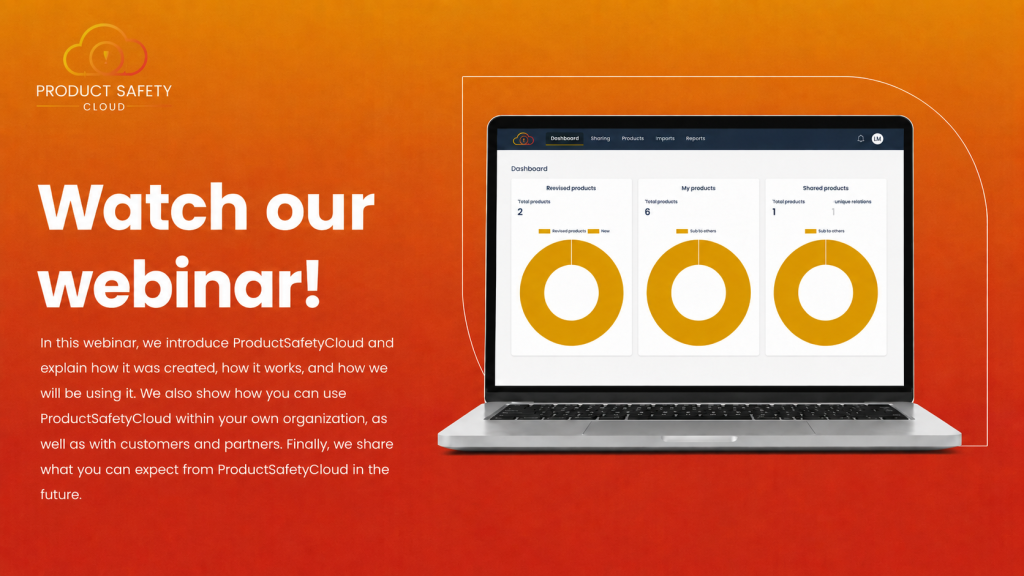
Managing Safety Data Sheets (SDS), sharing product safety information, and keeping communication clear across the supply chain can be challenging. ProductSafetyCloud is designed to make this process easier, more transparent, and more efficient.
In our webinar, we introduce ProductSafetyCloud and explain how the platform was created, how it works, and how we will be using it. The webinar gives you a clear overview of the idea behind ProductSafetyCloud and shows how it can support organizations in managing and sharing product safety information.
What you will learn in the webinar
During the webinar, we walk you through the key features and possibilities of ProductSafetyCloud. You will see how the platform helps organizations manage Safety Data Sheets, improve product safety communication, and collaborate more effectively with customers, suppliers, and partners.
We also explain how ProductSafetyCloud can be used within your own organization. Whether you are responsible for compliance, product safety, quality management, or supply chain communication, the platform offers a practical way to organize and share important safety information.
In addition, we show how ProductSafetyCloud can support collaboration outside your organization. By using the platform with customers and partners, product safety data can be shared more consistently, reducing manual work and helping everyone stay aligned.
The webinar also gives a look into the future of ProductSafetyCloud. We share what you can expect next, how the platform will continue to develop, and how it can become an even more valuable tool for organizations working with product safety data.
Why ProductSafetyCloud matters
Product safety information plays an important role in compliance, risk management, and responsible supply chain communication. With ProductSafetyCloud, organizations can work from one platform to manage and distribute relevant information more efficiently.
Watch the webinar
Surprised. Stunned. Indignant
Those were my first reactions upon reading the minutes of the “Reality Check Workshop: On the possible simplification of Chemicals legislation CLP,” organized by the European Commission. What was meant to be a working session quickly turned into a lament about the recently introduced CLP revision. But how is it possible that so many are still caught off guard?
The CLP Revision Didn’t Come Out of Nowhere
The first proposal for the CLP revision was published back in 2022. This was followed by consultations with stakeholders, public input rounds, and intense lobbying both in public and behind closed doors. The European Commission, the Parliament, the Council, and the Economic and Social Committee all reviewed and adjusted the proposal. After each round: more lobbying.
For over two years, the contents of the revision at least in broad terms have been known. Yet now, just months after the updated CLP entered into force, there’s talk of postponing deadlines and even reversing some of the changes.
Why the Surprise?
That’s the question that really puzzles me. Was our communication flawed? Did industry associations and companies truly fail to spread the word? Or did everyone simply bury their heads in the sand?
Let’s be clear: the changes introduced by the CLP revision are far-reaching, especially when it comes to labeling requirements. From product composition to packaging and supply chains everyone needs to adjust. But haven’t we had two full years to prepare? What exactly is so surprising?
Confusion Over Postponement and Rollbacks
What really shocked me was the suggestion to postpone deadlines or worse, revise the requirements again. A revision of the revision? But think about the companies that have already invested heavily. New labels, updated production lines, advanced multilayer labeling technology you can’t just throw that all aside.
Postponing deadlines might be defensible (we’ve seen this before with PCN notification delays), but rolling back the actual requirements? That would require going through the entire legislative process again which took two years the first time. By then, the current deadlines will have long passed.
A False Sense of Hope?
To me, it feels like industry is being offered false hope. The same institutions that reviewed and passed the revision will now have to re-evaluate it using largely the same information. Why would their conclusions be any different? Simply because industry now disapproves? That’s wishful thinking.
This smells of the same kind of political inconsistency we see in national policies. Mandatory heat pumps? Never mind. No more gas drilling? Actually, let’s do it. And now: sweeping changes to CLP but maybe not?
What Now?
Honestly, I don’t dare make predictions anymore. What once seemed impossible a rollback of the CLP revision now seems oddly plausible. Just six months after implementation.
Want context on the leaked proposal? Check it out here:
👉 Leaked info on LinkedIn
For now, rest assured that we’re monitoring these developments closely. You’ll be the first to know if anything changes.
de ViB fabriek B.V., experts in Safety Data Sheets (SDS/VIBs) and CLP compliance, and Quintens Advies & Management, the consultancy behind the ISA-service and known for its sharp focus on product liability and safety, announce their strategic partnership and the launch of ProductSafetyCloud: a next-generation platform for managing and distributing SDS documents within complex chemical supply chains.
Meeting the Needs of the Chemical Sector
Chemical suppliers face growing pressure to ensure the accurate distribution of up-to-date SDS documents to their customers — in the correct language, format and version. ProductSafetyCloud responds directly to these challenges with a platform designed by and for professionals in the chemical and hazardous materials industry.
“We’ve combined legal expertise, digital product design, and years of SDS & regulatory experience into one platform. ProductSafetyCloud automates compliance where possible and supports the so needed supply chain communication. We need to be ready for the future!” says Ivo Erens, CEO, de ViB fabriek.
What ProductSafetyCloud Offers
In the beta release, ProductSafetyCloud enables users to:
- Create and manage product portfolios linked to relevant SDS/VIB documentation
- Upload SDS files and control version history
- Automatically distribute SDS to the right customers
- Ensure traceability and compliance with REACH, CLP and national legislation
“The ISA-service has long helped large manufacturers, importers & wholesale companies manage their product liability and safety obligations. With ProductSafetyCloud, we are bringing this level of professional support and structure to small and medium-sized enterprises – making compliance accessible, scalable, and affordable” explains Geert Posma, CEO, Quintens Advies & Management.
What’s Coming Next
Future platform capabilities include:
- Webshop plugins for CLP compliance
- API integrations with ERP, WMS and CRM systems
- Automatically generated Workplace Instruction Cards (WIKs)
- Integration with the PIKA app for chemical register and safety instruction access
- Audit tools and registers for hazardous materials management
Designed for Practical Use
de ViB fabriek is renowned for its hands-on expertise in SDS creation, classification and labeling under CLP. The platform continues this legacy by enabling chemical companies to reduce manual work, avoid errors and respond quickly to new regulatory demands.
Who is it for?
ProductSafetyCloud is ideal for:
- Manufacturers and importers in the chemical sector
- Distributors, brand owners and webshops with hazardous products
- Compliance and safety professionals handling SDS obligations
- Companies seeking automation in document distribution and audit prep
Available Now for Beta Testers
A select group of companies has been invited to participate in the beta launch, which began on May 1, 2025. Participants receive early access, the opportunity to shape future features and tailored onboarding support.
To learn more or request access, visit www.productsafetycloud.com or contact info@productsafety.cloud