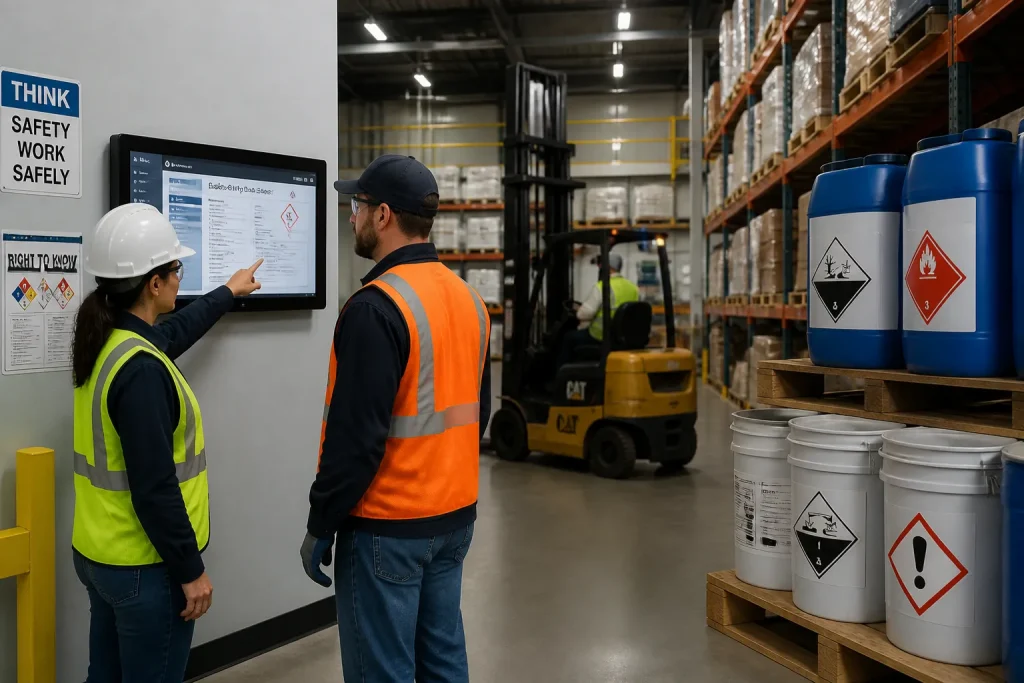
Digitally sharing product safety documents involves using a centralized online platform to give customers and partners secure, real-time access to the latest versions of essential files like Safety Data Sheets (SDS). This modern approach replaces inefficient and error-prone manual methods, such as emailing PDFs, ensuring everyone in your supply chain has the correct information when they need it. Read the overview article about sharing product safety documents
What does it mean to digitally share product safety documents with your supply chain?
To digitally share product safety documents means using a central online system, like our ProductSafetyCloud platform, to manage and distribute critical compliance and safety information to your supply chain partners. It is a strategic move away from traditional, time-consuming methods like printing documents or sending individual PDF attachments via email, which often lead to version control issues and administrative burdens.
This digital approach ensures that all stakeholders have on-demand access to the most current information from a single source of truth. Instead of searching through old emails or local drives, your partners can log into a secure portal to find exactly what they need. This method not only improves efficiency but also strengthens compliance and safety by eliminating the risk of using outdated documents.
Which types of product safety documents are usually shared digitally?
A wide range of documents is essential for product safety and compliance. With our platform, you can manage and share many types, including:
- Safety Data Sheets (SDS): The most common document, providing comprehensive information about hazardous substances and mixtures.
- Technical Datasheets (TDS): Details on product specifications and usage instructions.
- Detergent Declarations: Legally required ingredient lists for cleaning products.
- Ingredient Data Sheets: In-depth information about the components of a product.
- Product Labels and Specifications: Essential for proper handling, storage, and identification.
Who in the supply chain needs access to these documents?
Virtually every participant in the supply chain requires access to product safety information at different stages. This includes manufacturers who create the products, distributors who transport them, retailers and webshop owners who sell them, and ultimately the end-users. Additionally, internal compliance teams and regulatory bodies rely on this documentation to ensure safety standards and legal requirements are met.
How does a dedicated platform for sharing product safety documents work?
A dedicated platform for product safety documents works by providing a single, secure online environment where you can upload, organize, and grant controlled access to all your files. Our system automates updates and notifications, so when you upload a new version of a Safety Data Sheet, everyone with permission is immediately informed and can access the latest version. This eliminates manual communication and reduces the risk of non-compliance.
How are documents stored, updated, and organized on the platform?
Documents are stored centrally in our secure, EU-hosted cloud environment. You can organize them by product, category, region, or any other system that fits your workflow. Updating a document is simple: you just upload the new file, and it automatically replaces the previous version. The system maintains a history, but ensures that partners can only access the most current, approved version, preventing confusion.
How does the platform control who can view specific documents?
Access is managed through a robust permissions system. You have full control over who sees what. You can grant access to specific documents or entire folders to certain customers, suppliers, or internal teams. This ensures that sensitive information is only shared with authorized parties, maintaining confidentiality and security in line with GDPR standards.
How can structured safety data be shared instead of only static PDF files?
While PDFs are easy to share, they are static files. Our platform is built on the principle of data transfer. This means that instead of just sharing a document, we can transmit the structured data within it—such as hazard classifications, ingredient lists, or transport information. Your partners' systems can then automatically ingest and process this data, enabling automation for tasks like compliance checks or populating their own safety management systems. This creates far greater possibilities for efficiency across the supply chain.
What are the key concepts and terminology for sharing product safety documents?
Key concepts in digital product safety document sharing focus on ensuring the accuracy, security, and efficiency of information exchange. To navigate this process effectively, it is helpful to understand the specific document types, the systems for managing them (like version control), and the rules that govern access and data transfer.
What is the difference between an SDS, a technical datasheet, and a detergent declaration?
While all three documents relate to product information, they serve distinct purposes. A Safety Data Sheet (SDS) is a legally mandated, highly standardized document detailing the potential hazards of a chemical product and advising on safety precautions. A Technical Datasheet (TDS), on the other hand, focuses on a product's technical specifications, performance characteristics, and application instructions; it is not primarily a safety document. A Detergent Declaration is a specific regulatory requirement for cleaning products, listing ingredients to inform consumers, particularly regarding allergens.
What do terms like version control and access permissions mean?
These terms are central to secure digital document management. Version control is the process of managing revisions to a document to guarantee that all users are working with the most up-to-date and correct file. It prevents the use of outdated information. Access permissions are the settings you configure to define who can view, download, or manage specific documents. This allows you to share information confidently, knowing it will only reach the intended audience.
Conclusion
Digitally sharing product safety documents marks a significant evolution from outdated, manual methods. By embracing a centralized platform, you transition from sending static PDFs to enabling dynamic, controlled, and data-driven communication. This approach not only enhances operational efficiency and ensures regulatory compliance but also builds a more transparent and reliable supply chain. At ProductSafetyCloud, we are committed to providing the tools to make this transition seamless, secure, and future-proof for your organization.