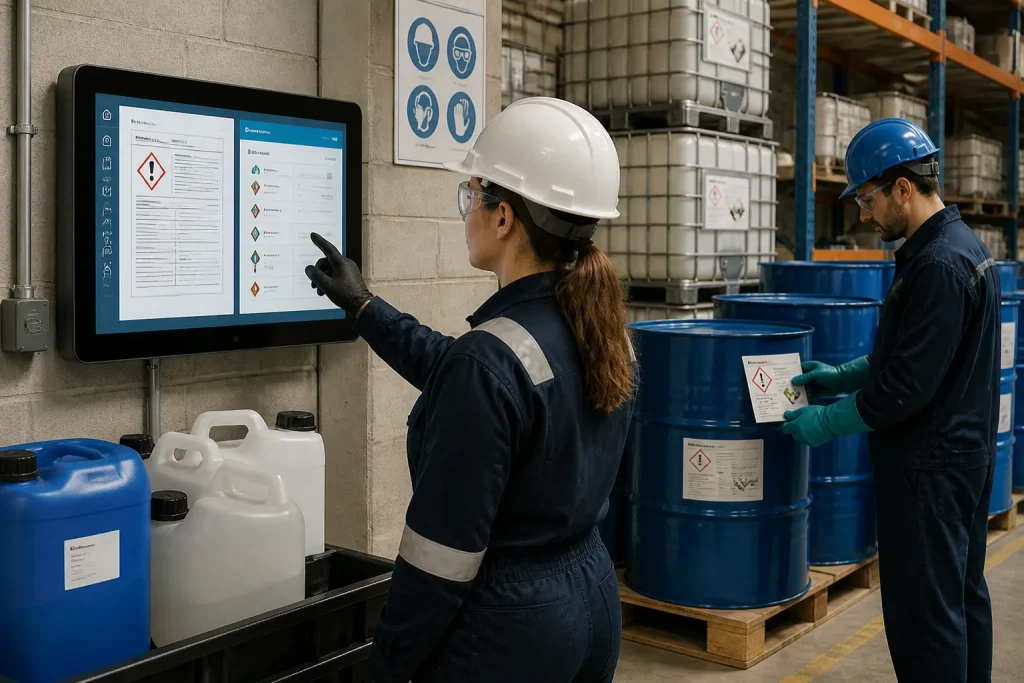
Choosing the right digital solution for sharing product safety documents requires a careful evaluation of security protocols, core features like version control, and ease of use for both your team and your supply chain partners. A dedicated platform should provide more than just file storage; it should enhance compliance, security, and efficiency. Read the overview article about Share product safety documents
What criteria are important when selecting a digital tool for sharing product safety documents?
The most important criteria for selecting a digital tool for sharing product safety documents are robust security, specialized features for compliance, and a simple, accessible user experience. These elements ensure that information is not only shared efficiently but also managed securely and in line with regulatory standards. Look for a solution that simplifies processes for everyone in the supply chain.
Key selection criteria for a product safety document solution:
- Security and Compliance: What role do hosting location and data protection play? Your chosen solution must offer strong security measures. With us, for example, the platform is hosted within the European Union, ensuring GDPR alignment. Features to look for include encryption (like SSL/TLS), secure password storage, and strict access controls that prevent unauthorized viewing of documents.
- Core Feature Set: Which features matter most for reliable sharing? Essential features include automatic version control to ensure everyone has the latest document, centralized management to avoid scattered files, and notification systems to alert users of updates. This eliminates the manual work of sending email updates.
- Usability for All Parties: How important is access for customers and partners? The platform must be easy for your partners, customers, and internal teams to use. A complicated system will lead to poor adoption. A good solution provides a clear interface where receivers can access the information they need without unnecessary complexity, directly improving supply chain communication.
- Future-Proof Technology: Does the platform support modern data exchange? A forward-thinking solution should be built for data transfer, not just sharing static PDF files. This opens up possibilities for automation and integration with other business systems, making your processes more efficient.
How does a dedicated platform for product safety documents compare to email or cloud storage?
A dedicated platform offers superior control, traceability, and a more professional user experience for sharing product safety documents compared to generic tools like email or cloud storage. While email is familiar, it lacks version control and creates security risks. Generic cloud storage is better for storage but lacks the specialized compliance and distribution features needed for regulated documents like Safety Data Sheets (SDS).
| Feature | Dedicated Platform (like ours) | Generic Cloud Storage | |
|---|---|---|---|
| Version Control & Traceability | Automatic. Always provides the latest version. Full audit trail of who accessed what and when. | Manual and error-prone. No central truth, leading to outdated document usage. No traceability. | Basic versioning exists, but no automated distribution or access logging for compliance. |
| Access Management | Granular control. You define precisely who can see which documents and for how long. Secure login for all users. | Insecure. Once sent, control is lost. High risk of forwarding to unauthorized persons. | Limited user roles. Not designed for secure, auditable external sharing of sensitive documents. |
| User Experience for Receivers | Centralized, professional portal. Customers can easily find all relevant, up-to-date documents in one place. | Cluttered inboxes. Documents get lost, and users are never sure they have the correct version. | Can be confusing with folder structures. Requires recipients to manage yet another shared drive link. |
How do approaches that share product safety documents as data compare with approaches that only share PDFs?
Sharing product safety information as structured data, rather than just as static PDF files, unlocks significant opportunities for automation, integration, and advanced analysis that PDFs cannot offer. A data-centric approach transforms documents from simple images of text into machine-readable information that can be used directly by other software systems, creating a more connected and efficient supply chain.
| Aspect | Data-Centric Sharing | PDF-Only Sharing |
|---|---|---|
| Automation & Integration | High potential. Data can be automatically pulled into other systems (e.g., ERP, WMS) to trigger safety protocols or update product information without manual entry. | Low to none. Information is locked in a static format. Data extraction requires manual work or complex OCR software, which is often unreliable. |
| Data Accessibility | Information is structured and immediately usable. For example, specific hazard statements or handling instructions can be queried and used in reports or workflows. | Users must manually read the document to find specific information. The content is not easily searchable or analyzable by machines. |
| Future Possibilities | Enables advanced applications, such as large-scale risk analysis, automated compliance checks, and integration with emerging supply chain technologies. | Limited to human reading and archival. It does not support the evolution towards a more digitized and automated industry. |
| Limitations | Requires a platform that supports data exchange. Initial setup may involve aligning data formats. | Universally readable and simple to share for basic purposes, but offers no advanced functionality and creates data silos. |
Conclusion
Choosing the right solution for sharing product safety documents goes beyond simple file hosting. It's about selecting a secure, reliable, and efficient system that strengthens your supply chain communication. By prioritizing a dedicated platform that offers robust access controls, automated versioning, and future-proof data-sharing capabilities, you not only improve compliance but also provide a better, more professional service to your partners and customers. This strategic choice reduces manual work and ensures everyone has the correct information when they need it.