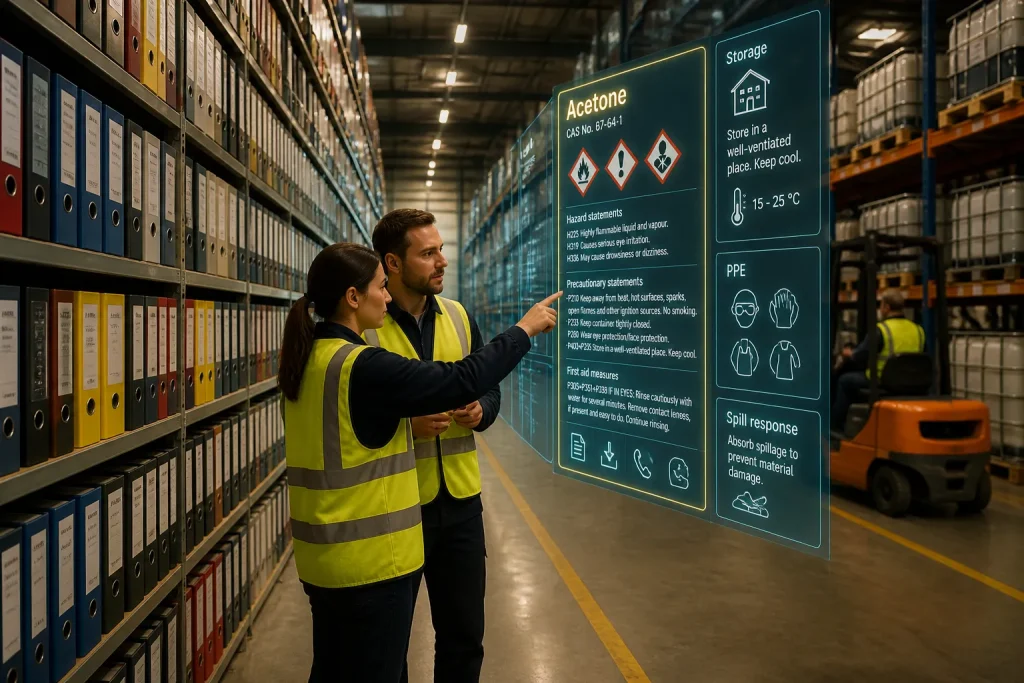
Digitalizing Safety Data Sheet (SDS) management means replacing paper-based systems or scattered PDF files with a centralized, structured digital platform. This transition treats product safety information as manageable data rather than static documents, which streamlines updates, simplifies distribution, and improves compliance across your supply chain. With a platform like ours, you can manage and share safety information effortlessly and reliably. Read the overview article about Digitalize SDS management
What is involved when you digitalize SDS management?
Digitalizing SDS management involves adopting a central platform to replace manual processes like emailing PDFs or maintaining paper binders. It means treating product safety information as structured data, which allows for automated updates, controlled access, and streamlined communication with your customers and partners.
Instead of searching through folders and email chains, all your safety documents are stored in one secure, accessible location. This shift fundamentally changes how you handle critical compliance documents. When an SDS is updated, our system can automatically notify and distribute the new version to all relevant customers you have connected to that product. This proactive approach ensures everyone in your supply chain has the most current information, reducing risk and manual effort.
This process isn't limited to just Safety Data Sheets. A comprehensive digital approach includes all relevant product safety documentation. This means you can manage technical datasheets and detergent declarations alongside your SDSs, creating a single source of truth for each product in your portfolio. By centralizing these documents, you create a more efficient and reliable communication workflow.
How does digitalized SDS management work in practice?
In practice, digitalized SDS management works by providing a central online hub where you can upload, organize, and share all your product safety documents. Instead of just acting as a file repository, our system is designed for data transfer, which automates distribution to your customers and provides powerful tools to manage compliance efficiently. This makes day-to-day operations simpler and more secure.
How are Safety Data Sheets captured as structured data instead of just PDF files?
While the process begins with uploading a PDF document, our platform is built for data transfer, not just file sharing. This means the system is designed to process key information from the documents, treating it as structured data. This creates a foundation for more advanced capabilities beyond simple file storage, enabling smarter search, filtering, and integration in the future.
How does the system handle multiple languages and regional SDS variants?
A digital system allows you to link multiple language or regional versions of an SDS to a single product. When you set up your customers in the platform, you can connect them to the specific product version they need. This ensures they always receive the correct, compliant documentation for their market automatically, eliminating confusion and potential compliance issues.
How does it support searching, filtering, and reporting on hazardous products?
By managing your SDS library in a centralized digital system, you gain powerful search capabilities. You can instantly find documents based on product names, identifiers, or other metadata. This replaces the time-consuming and often frustrating task of manually searching through email archives, local drives, or scattered shared folders to find the correct document when you or a customer needs it.
Which data and document types should be included in a digital SDS management system?
A comprehensive digital SDS management system should include not only the full Safety Data Sheet documents but also related product safety information and essential metadata. This ensures a complete, auditable, and easily accessible record for each product, covering everything from regulatory compliance and versioning to clear supply chain communication.
The core of the system is the SDS itself, but its value is enhanced by including other critical documents. As we've seen in traditional supply chains, communication often involves more than just the SDS. Therefore, documents that should be included are:
- Safety Data Sheets (SDS): The primary document detailing chemical properties, hazards, and safety precautions.
- Technical Datasheets (TDS): Documents providing detailed technical specifications and application information for a product.
- Detergent Declarations: Legally required documents for detergent products, listing their ingredients.
Furthermore, capturing key metadata is crucial for effective management. This includes product identifiers like article numbers, document version numbers, revision dates, language, and the target region or country. This metadata makes the system searchable and enables the automated distribution of the right document to the right customer every time.
Conclusion
Digitalizing SDS management is a strategic move away from inefficient, risky manual processes toward a streamlined, secure, and compliant system. It transforms static documents into manageable data, ensuring that your entire supply chain has access to up-to-date safety information. By centralizing SDSs, technical datasheets, and other documents, you reduce administrative burdens and enhance transparency. Our free platform is designed to make this transition simple, allowing you to manage and distribute safety documents effortlessly and build a more reliable supply chain.