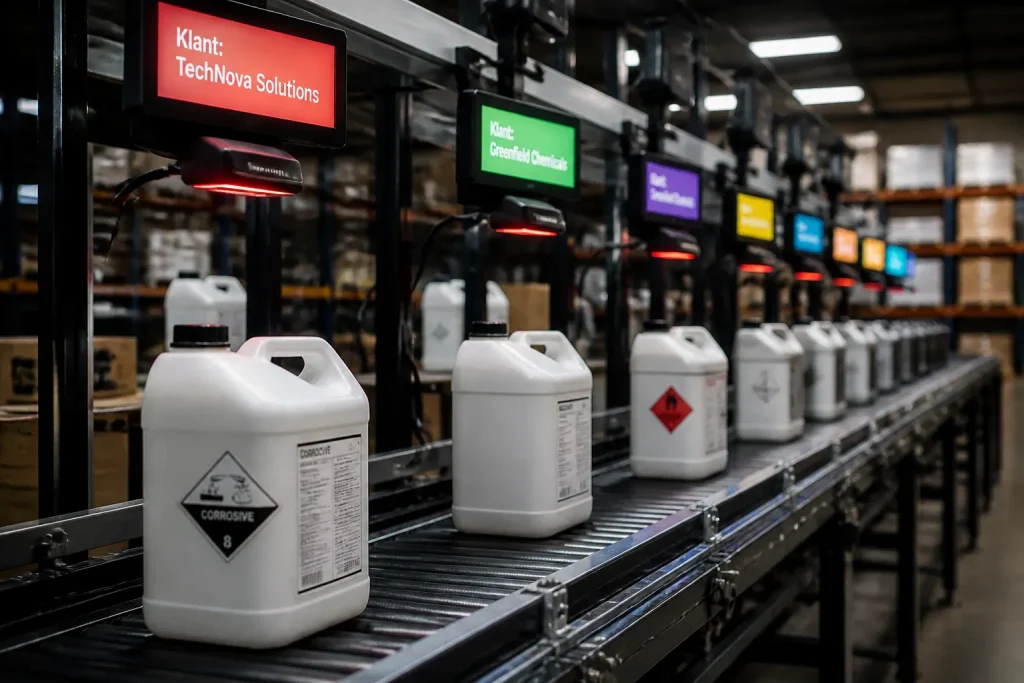
Automating safety data distribution means using a platform to keep product safety information centrally managed and automatically shared with the right customers, instead of sending individual PDFs by email or file transfer. We use a data-based approach (often called a product safety data exchange platform) so updates flow through your supply chain with minimal manual work. Safety Data Sheets (SDS), detergent declarations, and technical datasheets stay accessible in one place, while rules and identifiers determine who receives what. This article gives a high-level guide and links through to deeper articles on each topic.
What does it mean to automate safety data distribution across the supply chain?
Automating safety data distribution means centralizing product safety information once, then letting the platform deliver and update it automatically to every linked customer and partner. Instead of chasing emails and shared folders, we connect products to customers and let rules, identifiers, and version control handle the rest. In practice, you upload Safety Data Sheets and other safety documents, link them to products, and assign those products to customers. When something changes, the latest version is immediately available to everyone who should see it. This covers SDS, detergent declarations, and technical datasheets in a single, structured environment. Read more about what automated safety data distribution means
What options exist to automate safety data distribution and how do they typically differ in features?
You can automate safety data distribution with free online platforms, paid SaaS solutions, or custom integrations that extend existing systems. With us, you can start on a free online platform that already lets you upload SDS (single or bulk), manage customers, and connect products so distribution is handled automatically. More advanced setups typically add features such as data-based exchange instead of only PDFs, API connections, webshop or ERP integrations, and more granular access control or reporting. The main differences between options lie in how deeply they connect to your IT landscape, how data-centric they are, and how far automation goes beyond basic document sharing. Explore feature options for automated safety data distribution
How do you set up automated safety data distribution for your products step by step?
To set up automation, you first centralize your safety documents, then structure products and customers, and finally define the links and rules between them. On our platform this becomes a simple, guided flow: sign up, upload your SDS files (individually or via bulk upload), set up and manage your customers, then connect products to those customers so the platform does the rest. Beforehand, it helps to clean up product identifiers and customer lists so ownership is clear. After the initial setup, you refine rules for new products, discontinued items, and version updates so distribution keeps running smoothly with minimal manual intervention. See the step-by-step setup for automated safety data distribution
What should you look for when selecting a platform to automate safety data distribution?
When you choose a platform, focus on central management, data-based distribution, and secure access for your supply chain partners. You need to manage SDS and other safety documents from one place, reduce manual requests, and be confident everyone sees the latest version at any time. Look for EU-hosted infrastructure, encrypted connections (such as SSL/TLS), strong access control, and alignment with GDPR if you operate in or with Europe. Usability also matters: customers and partners should be able to find their safety data quickly without training. Finally, check that the platform is built for roles like manufacturers, distributors, retailers, and compliance teams, not just internal use. Compare platforms for automated safety data distribution
In which situations does it become crucial to automate safety data distribution?
Automation becomes crucial once manual emailing of safety documents starts slowing you down or creating risk that customers use outdated information. This typically happens when you manage many products or mixtures, serve a growing number of customers, or operate across several countries and regulations. It also becomes urgent if your formulations or SDS versions change regularly, making it hard to keep every recipient updated. For retailers and webshops, automation is key when product catalogs grow and you want safety information to stay aligned with online listings. In all these situations, a central, data-based platform helps you stay in control and compliant. Discover when automated safety data distribution is critical
What results can you expect after automating safety data distribution?
After automating safety data distribution, you can expect fewer manual emails, faster responses to safety document requests, and clearer proof that customers have access to current information. We see companies reduce manual handling by centralizing SDS, detergent declarations, and technical datasheets so updates flow automatically to linked customers. Consistency improves because there is one controlled source of truth instead of scattered files. Automation also supports audit readiness: you can show which version was available to whom and when. Combined with EU-based hosting, encrypted connections, and strict access control, this creates a more secure and compliant safety data process with less daily effort. Learn about results from automated safety data distribution